House Rules: Digital Paper Games



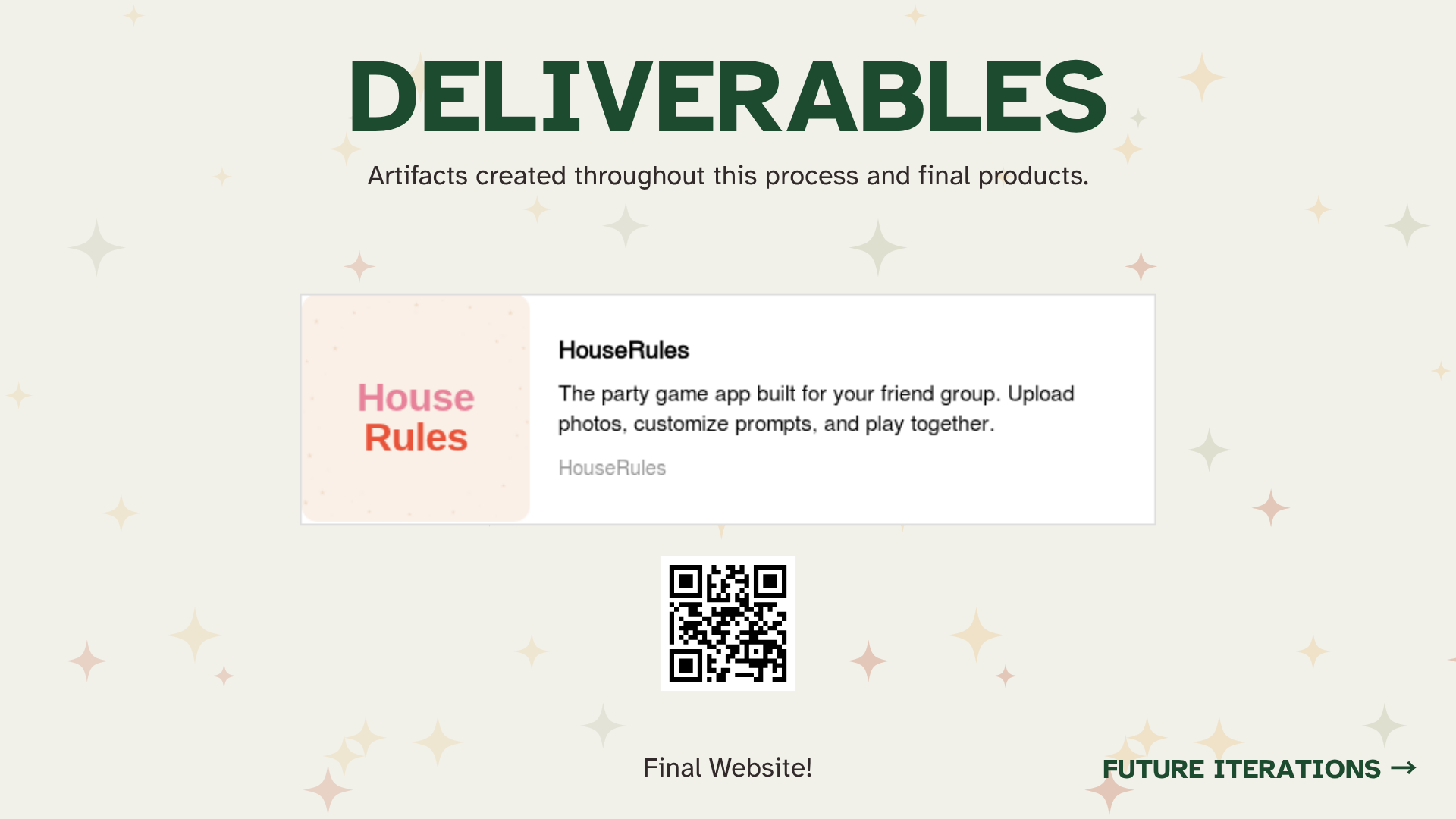

You can read the whole description or you can play the game here:
Role: Accessibility Researcher & UX Designer
Team: Averie Dow, Katie Fischer, Adri McCarville, Avery Kissinger
Context: Design for Accessibility (INFO 4871), CU Boulder
Tools & Methods: WCAG 2.2 AAA Checklist, Silktide, Lighthouse, Figma Annotations, External SME Review
Key Deliverables: 101-Issue Audit Matrix, Golden Path User Flow Map, High-Fidelity Figma Remediation Specs, Code-Level HTML/ARIA Recommendations
Overview
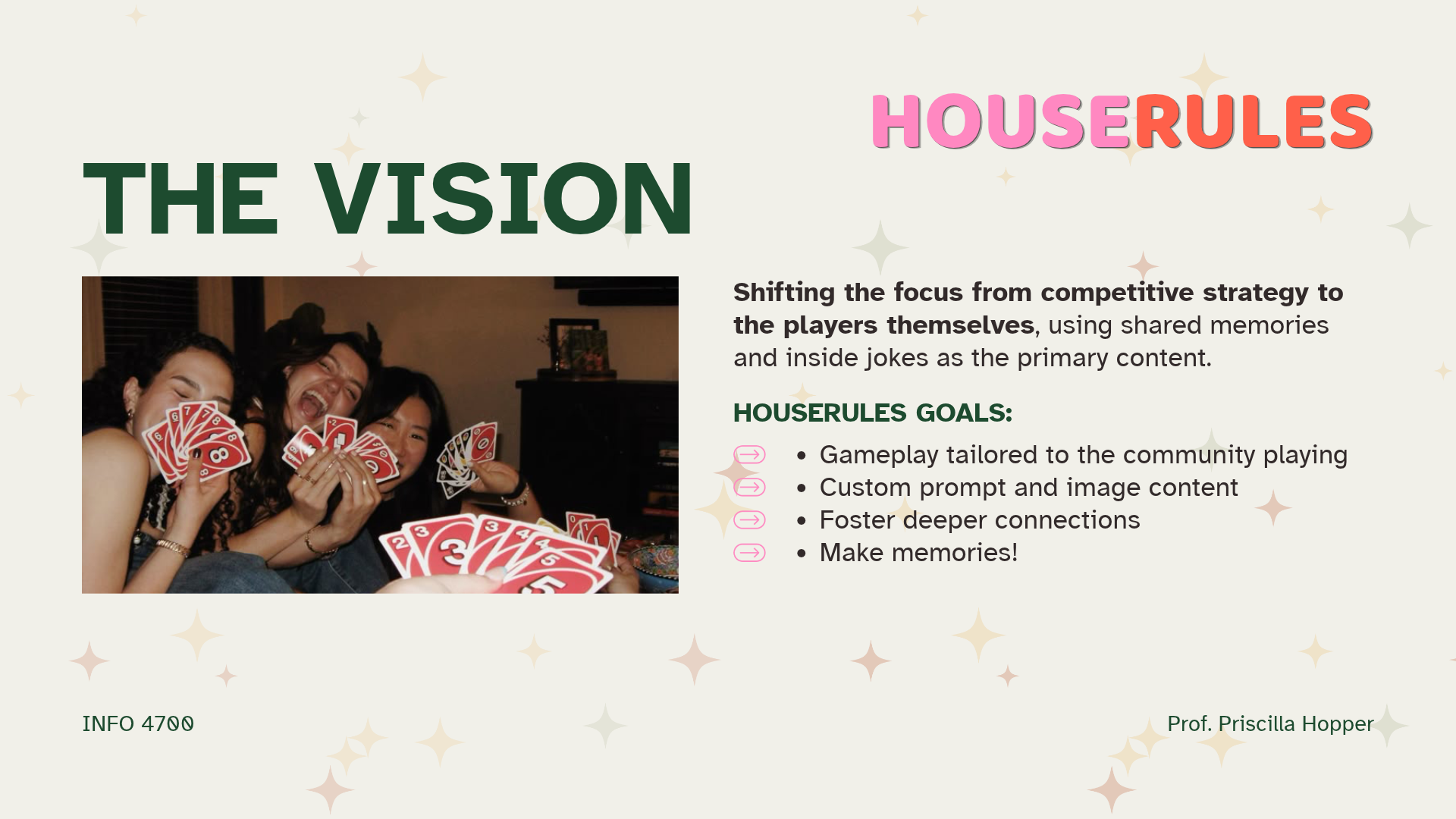
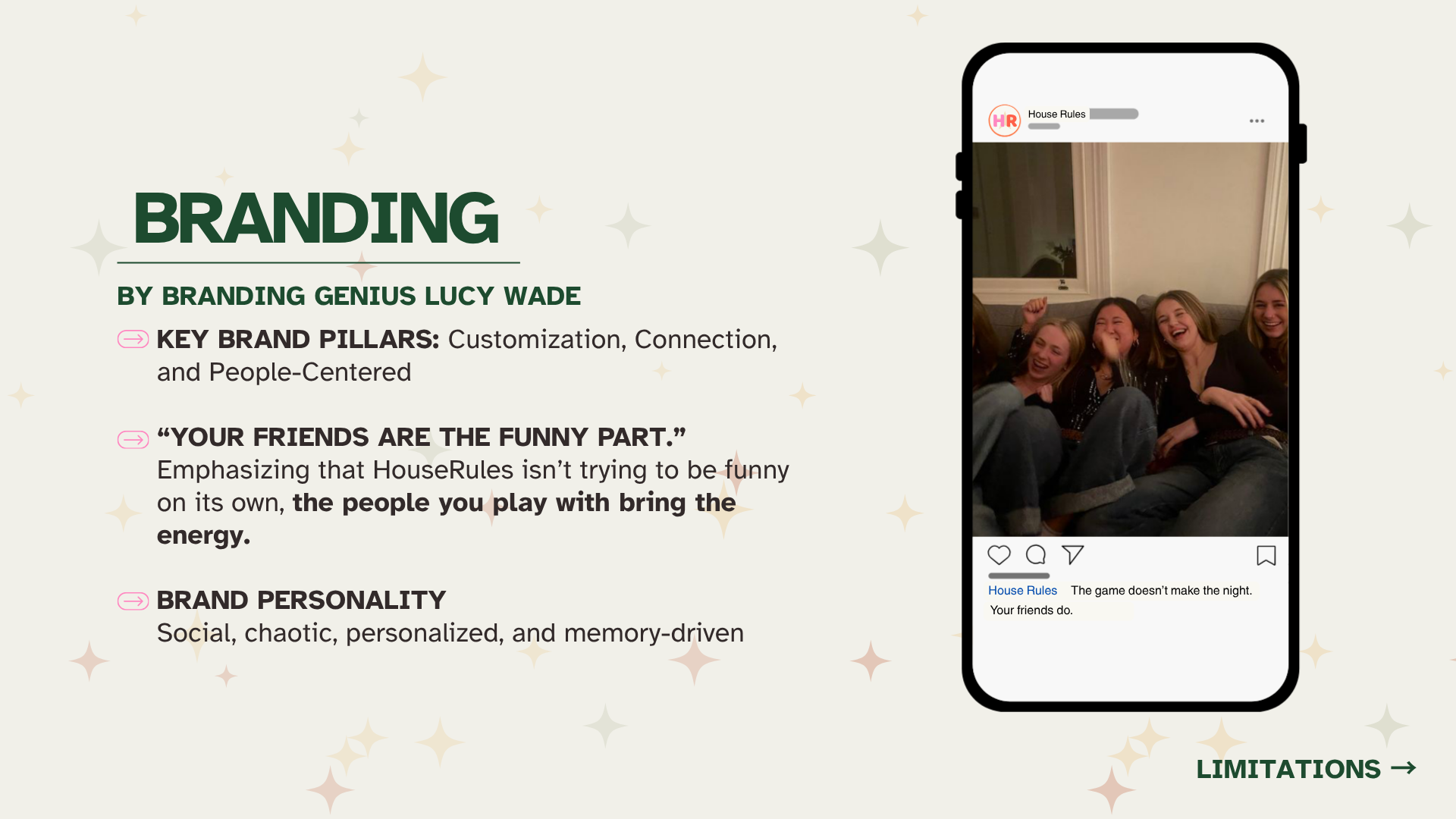
College friend groups were frustrated by rigid party games like Jackbox that felt stale, repetitive, and impossible to customize, so our team designed and built HouseRules—a web-based party game platform supporting 4 to 10 players with real-time multi-device sync. By combining rapid paper prototyping, a full Figma design system, and a React web app powered by Playroom, we enabled players to turn their own inside jokes, custom prompts, and camera-roll photos into playable party games in seconds without downloading an app.
Tension
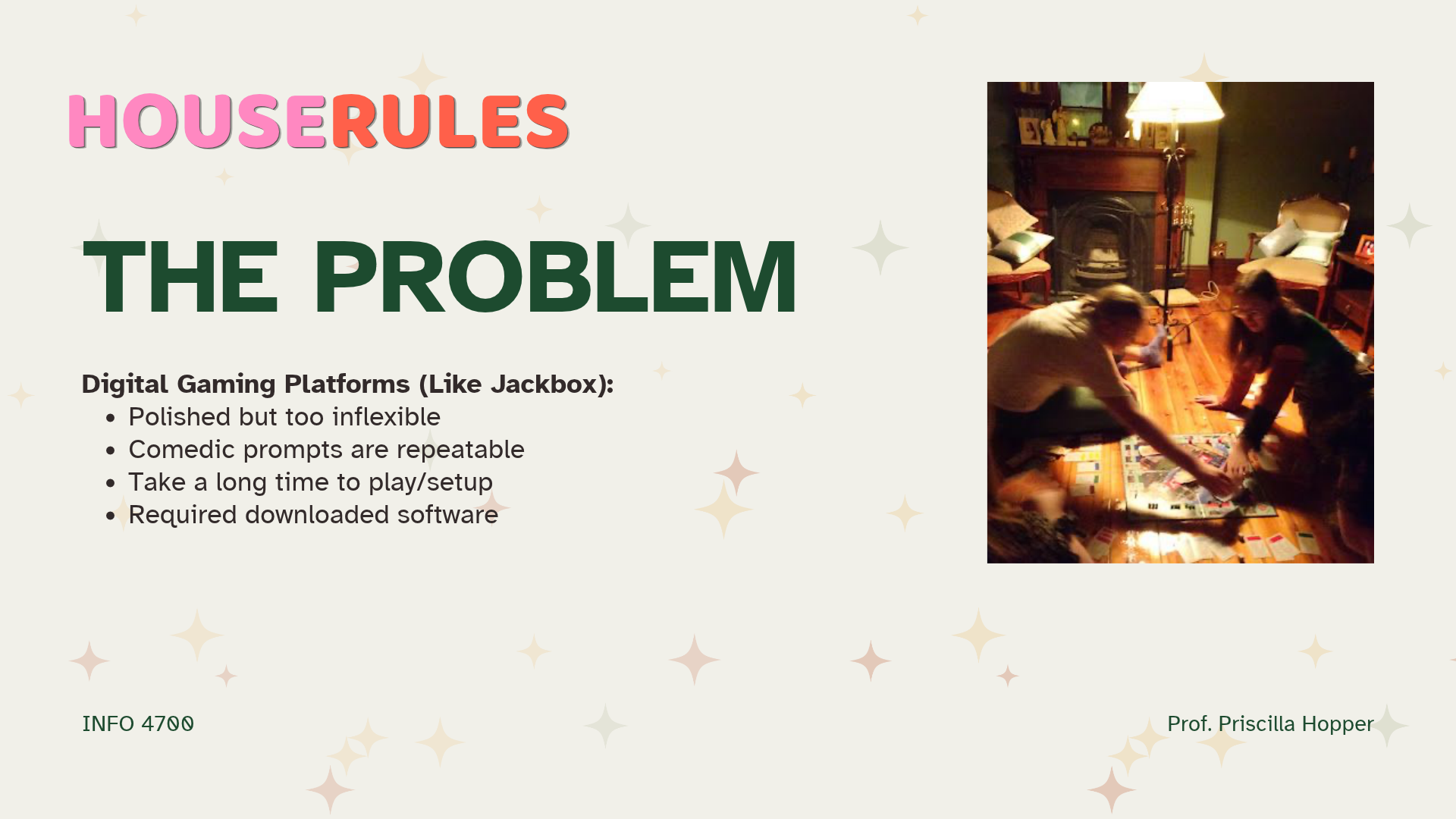
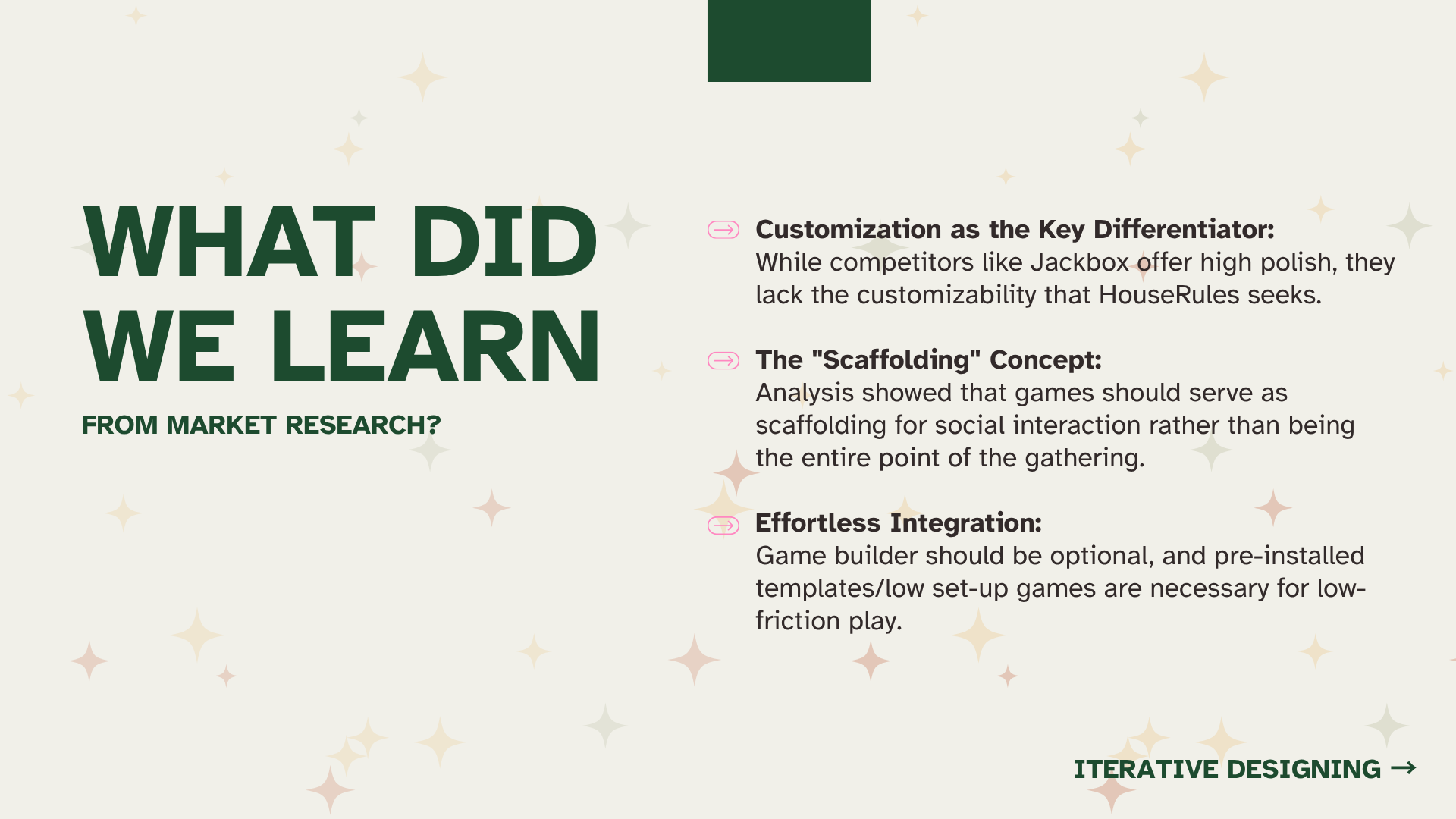
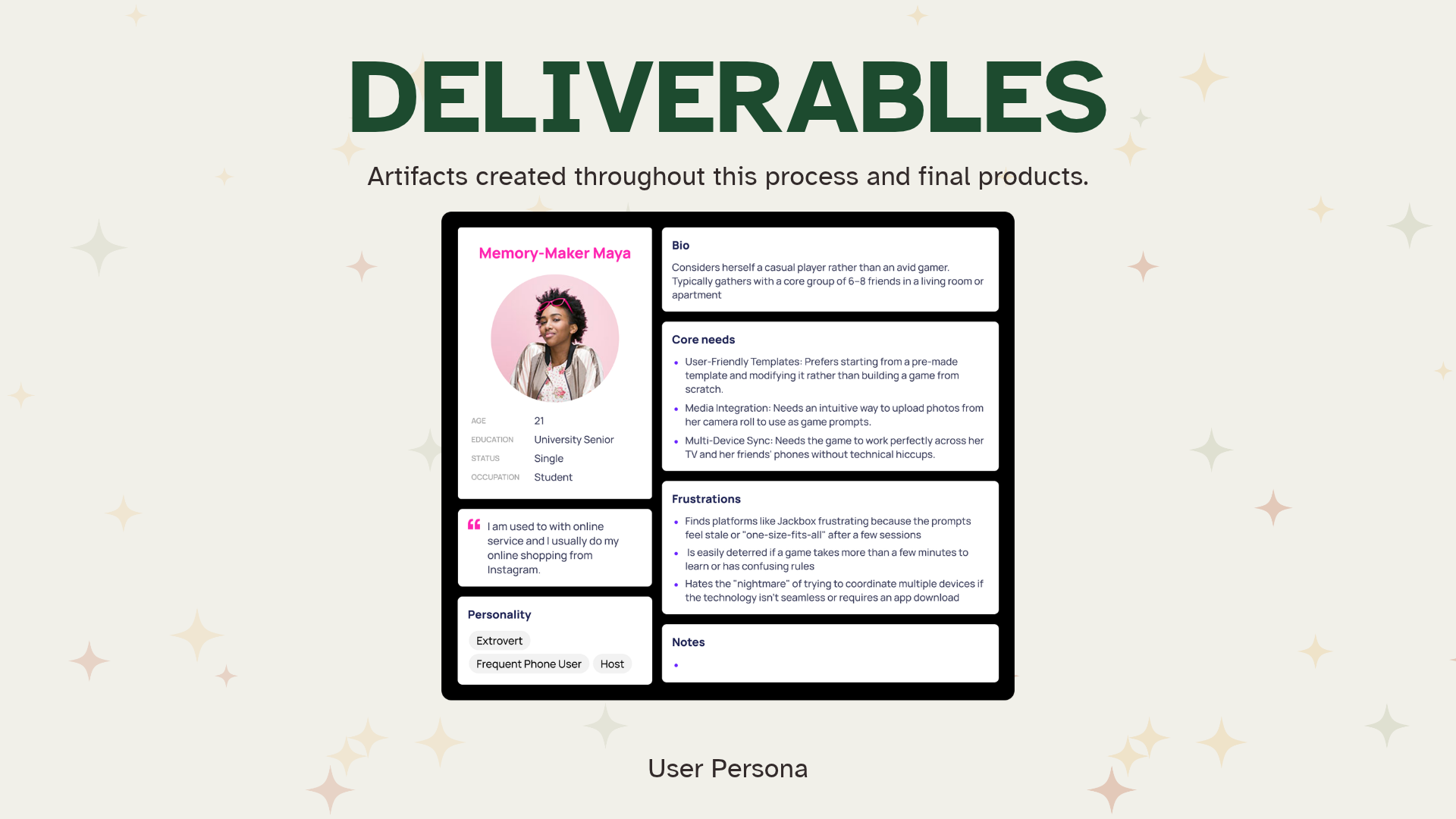
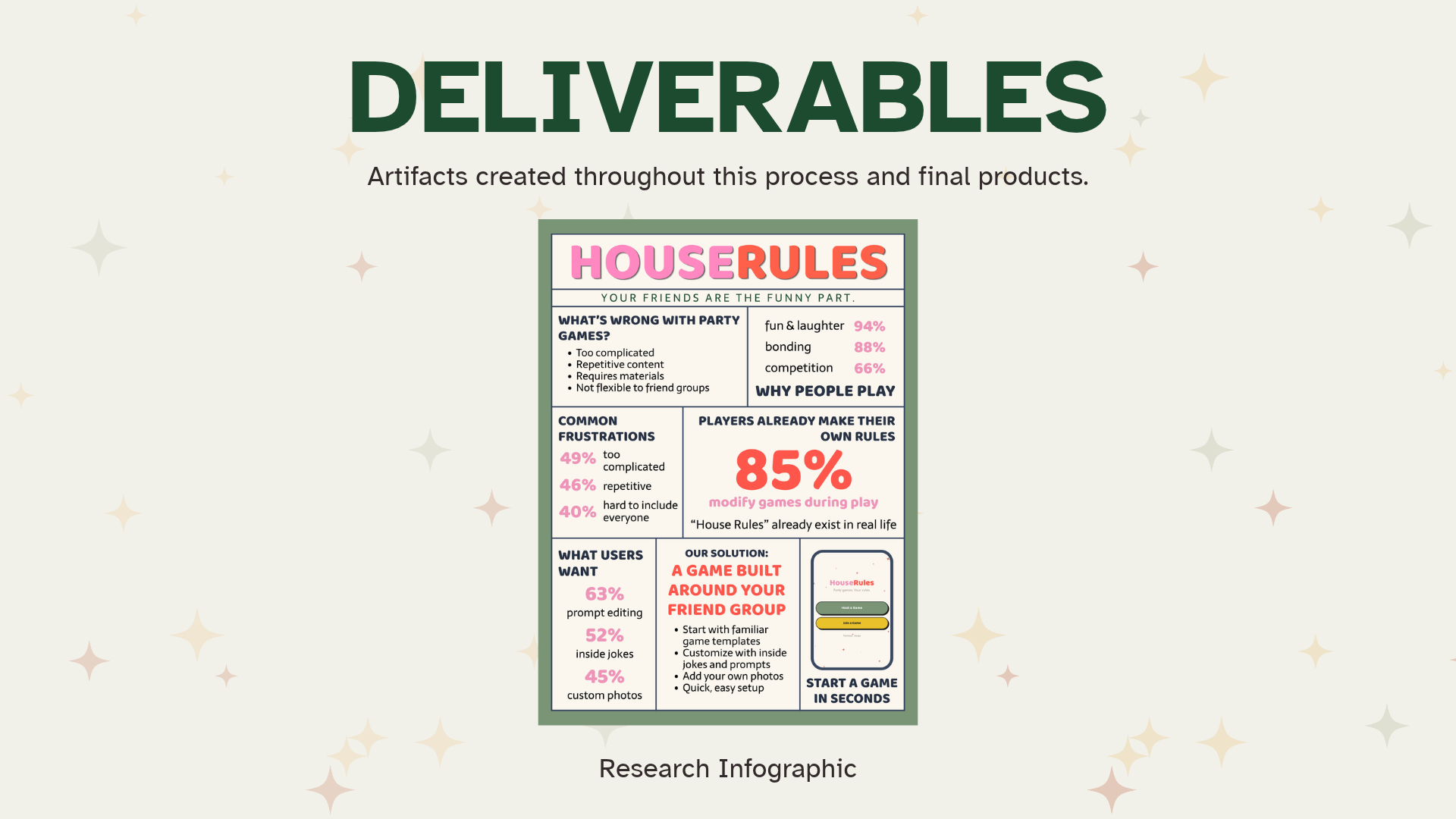
Classic party game nights face two big problems. Physical parlor games like Fishbowl and Charades require pens, paper slips, and messy prep that friends rarely have on hand. Meanwhile, popular digital alternatives like Jackbox are expensive, require downloads, and trap players in pre-written, repetitive prompts that get boring after a few rounds.
Our research showed that 85% of social gamers already modify game rules on the fly to fit their group's sense of humor. Yet, existing digital platforms offer zero room for inside jokes or custom rules. For casual hosts, trying to coordinate game night across phones and TV screens usually results in clunky setups, confusing instructions, and lost momentum. If digital party games do not become flexible, groups abandon them for mindless scrolling or stop hosting game nights altogether.

Design
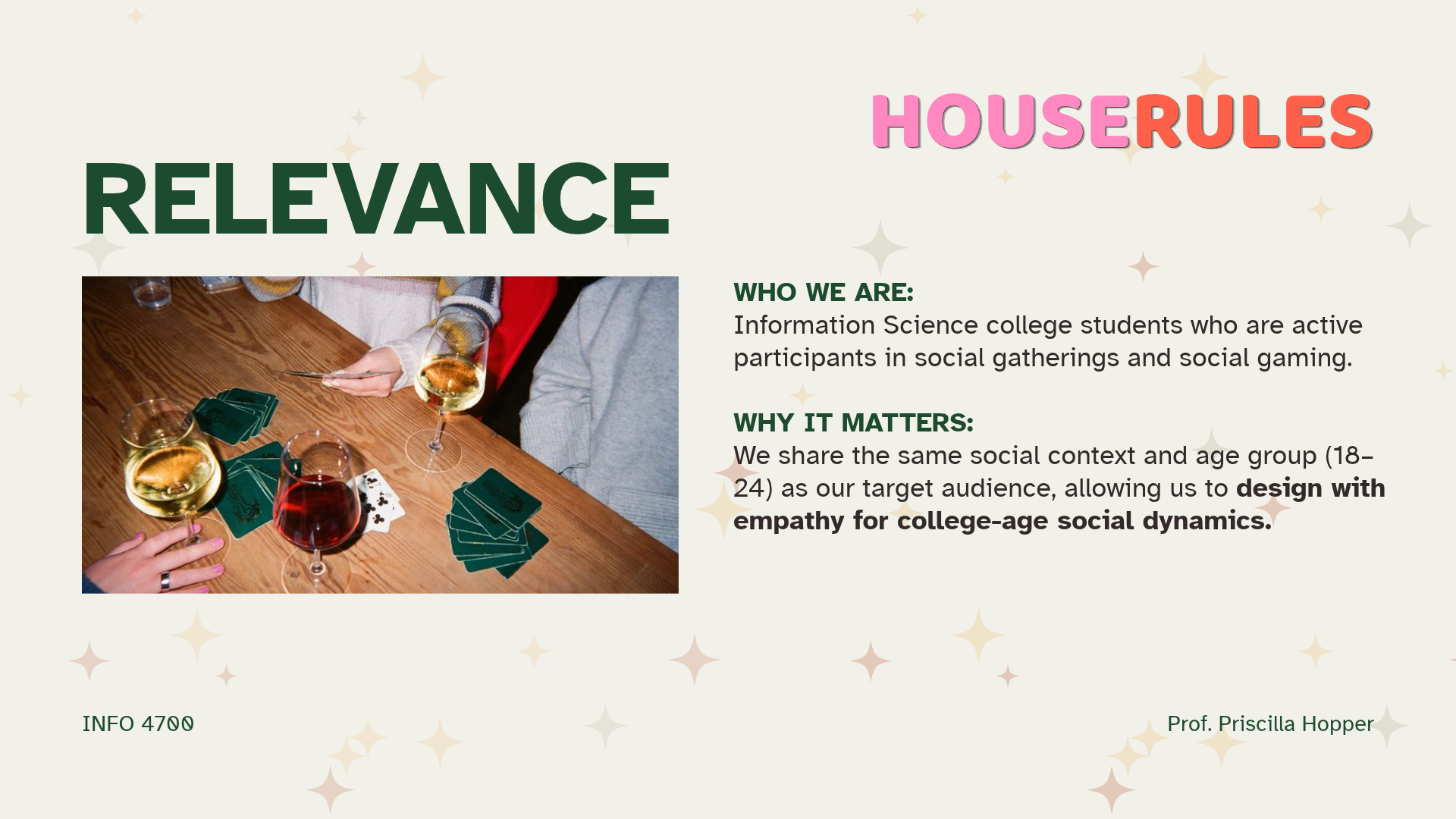
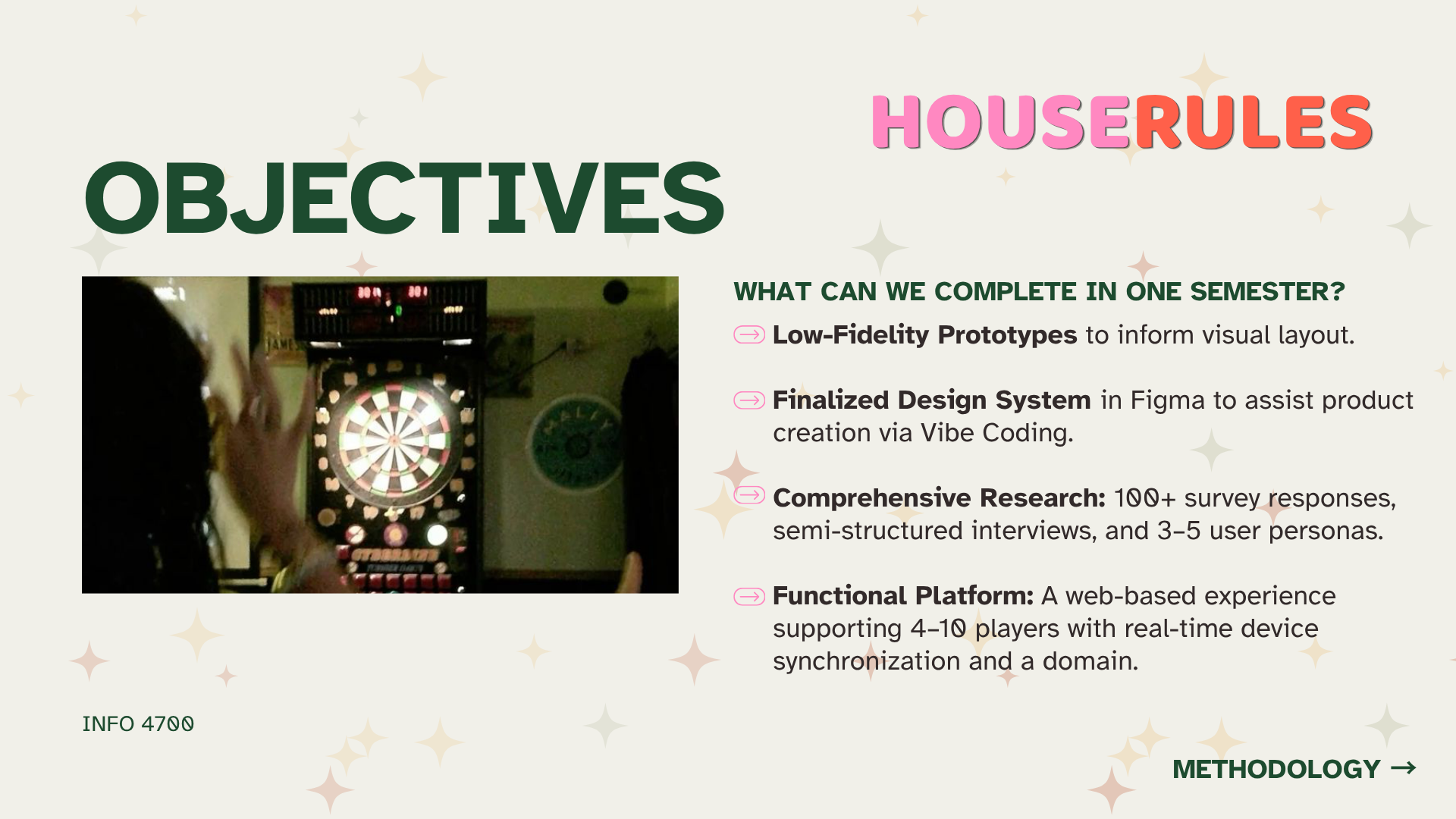
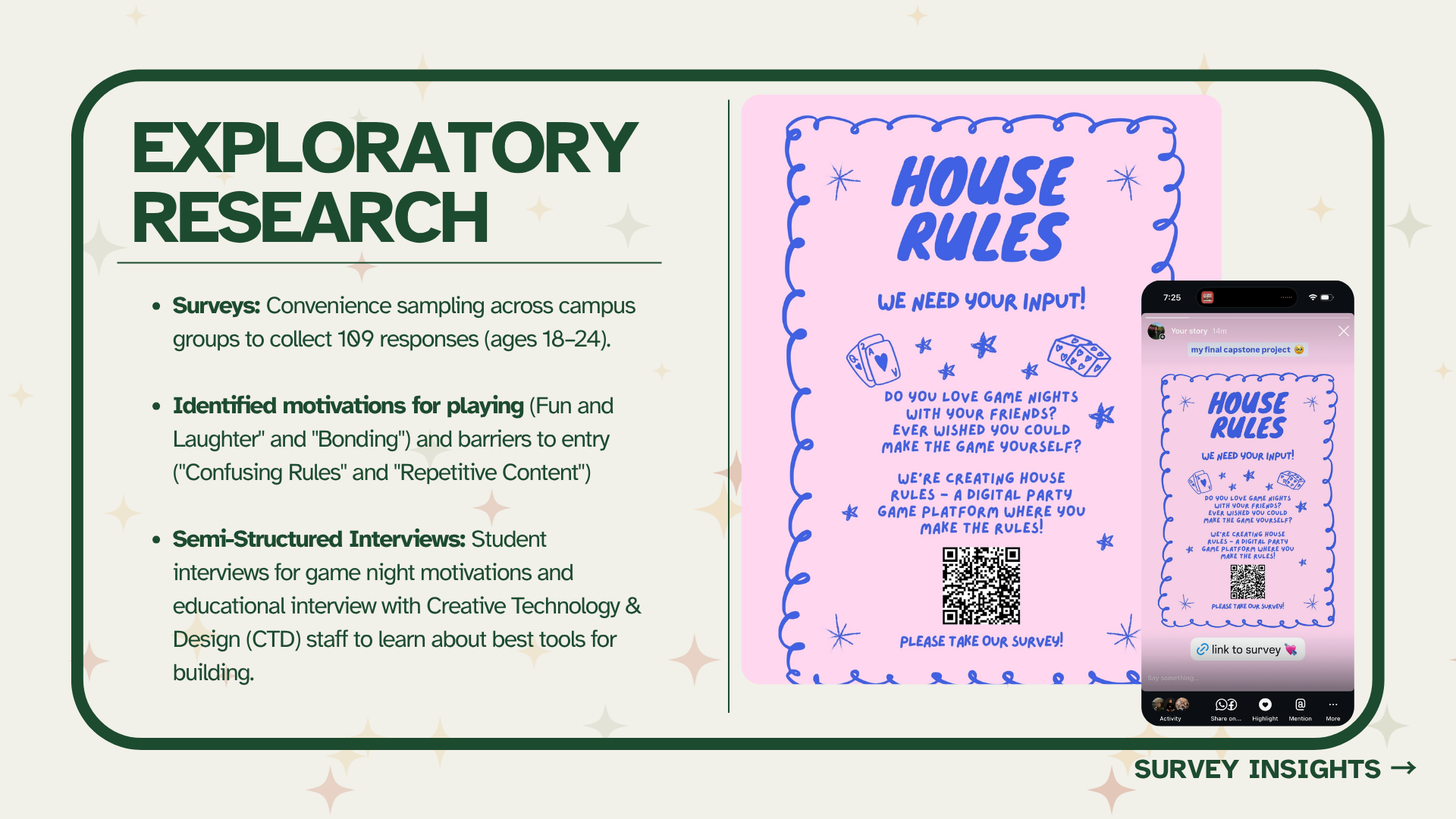
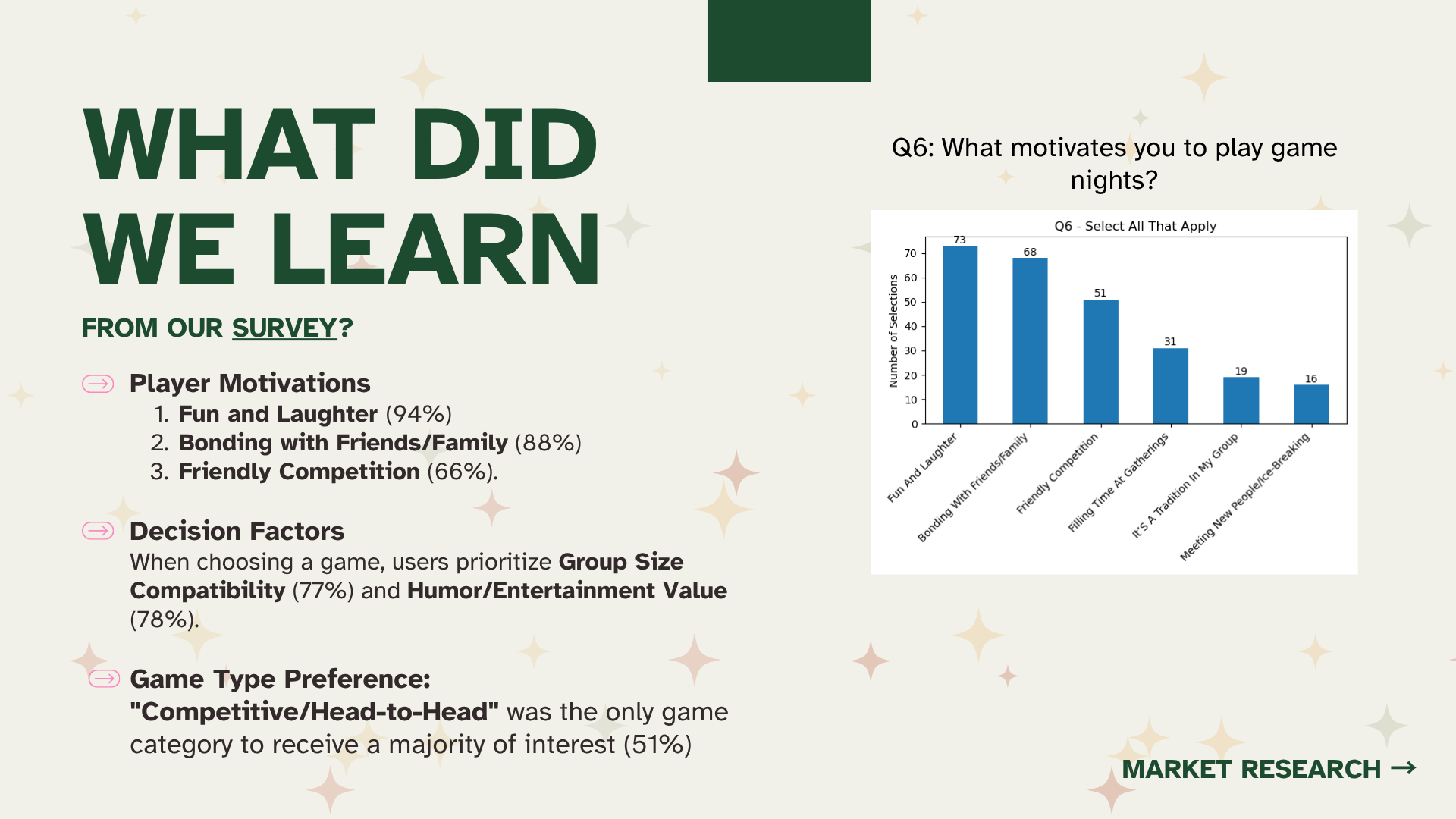
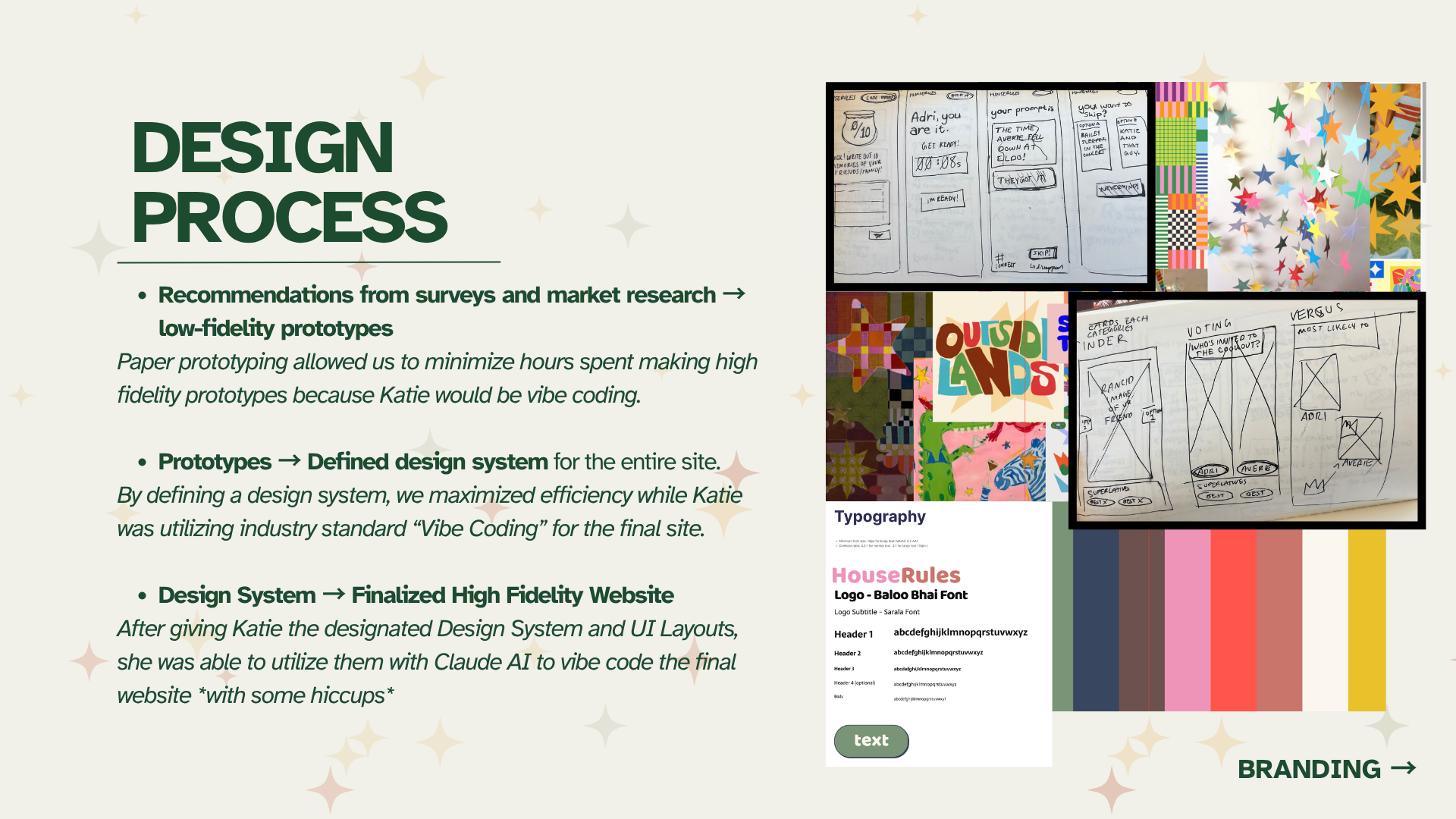
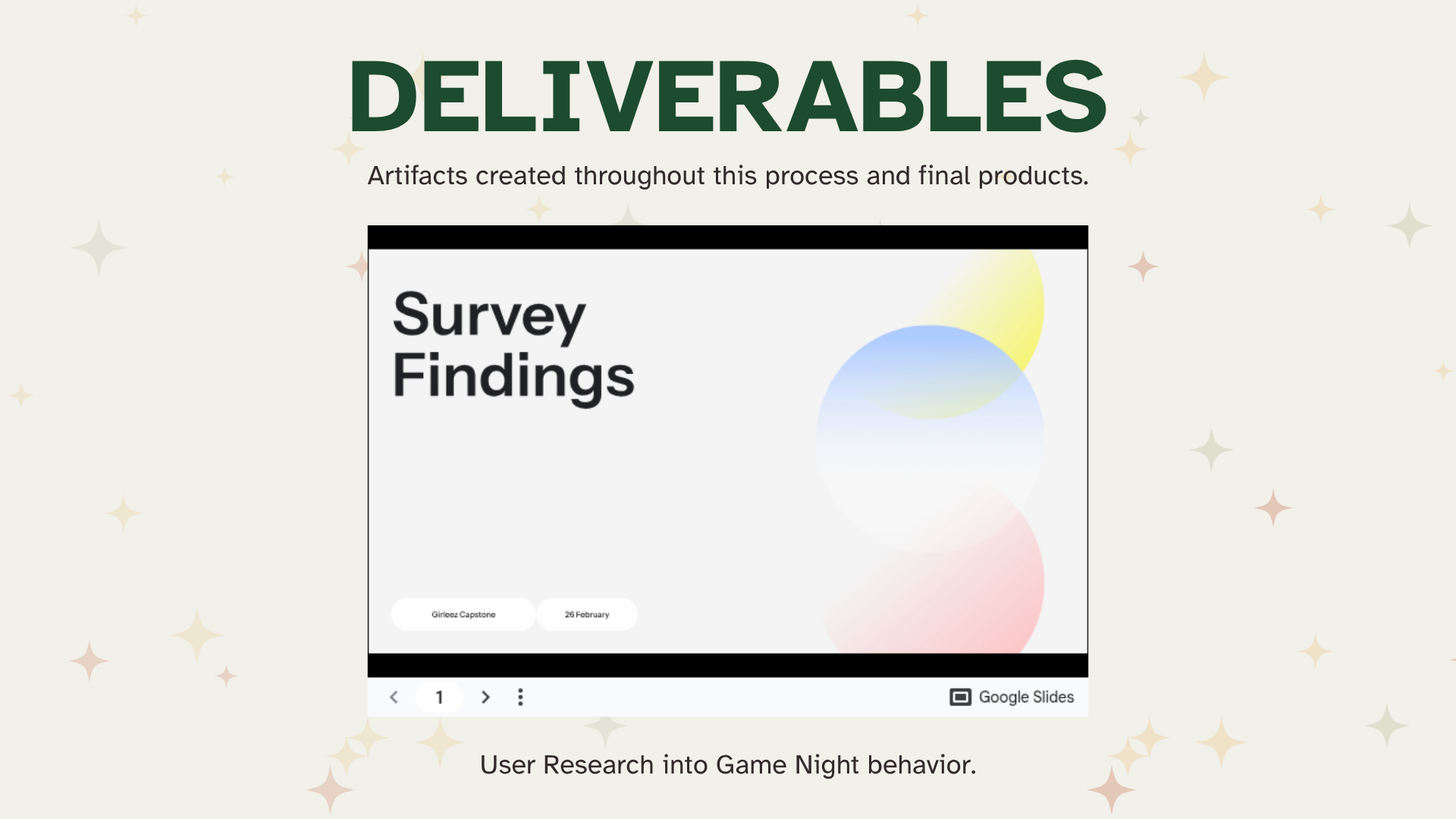
We started by surveying 109 college-aged players (ages 18–24) and running semi-structured interviews with students and creative technology faculty to map game night friction. To bypass time-consuming high-fidelity mockups early on, we used paper prototypes to quickly test intuitive game-builder pathways and prompt-editing flows. From there, we established a complete Figma design system—complete with custom typography, bright color palettes, and accessible UI cards.
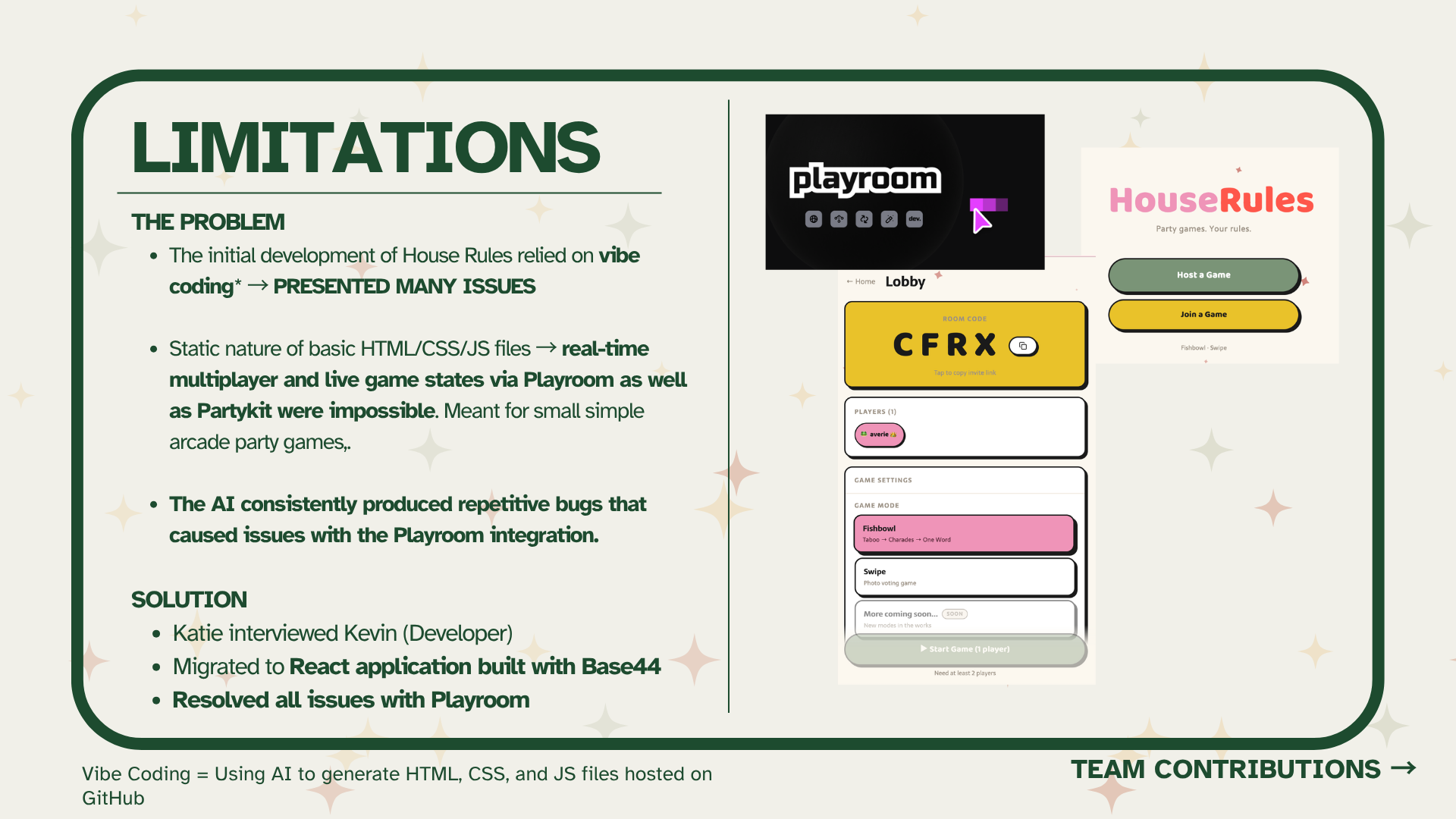
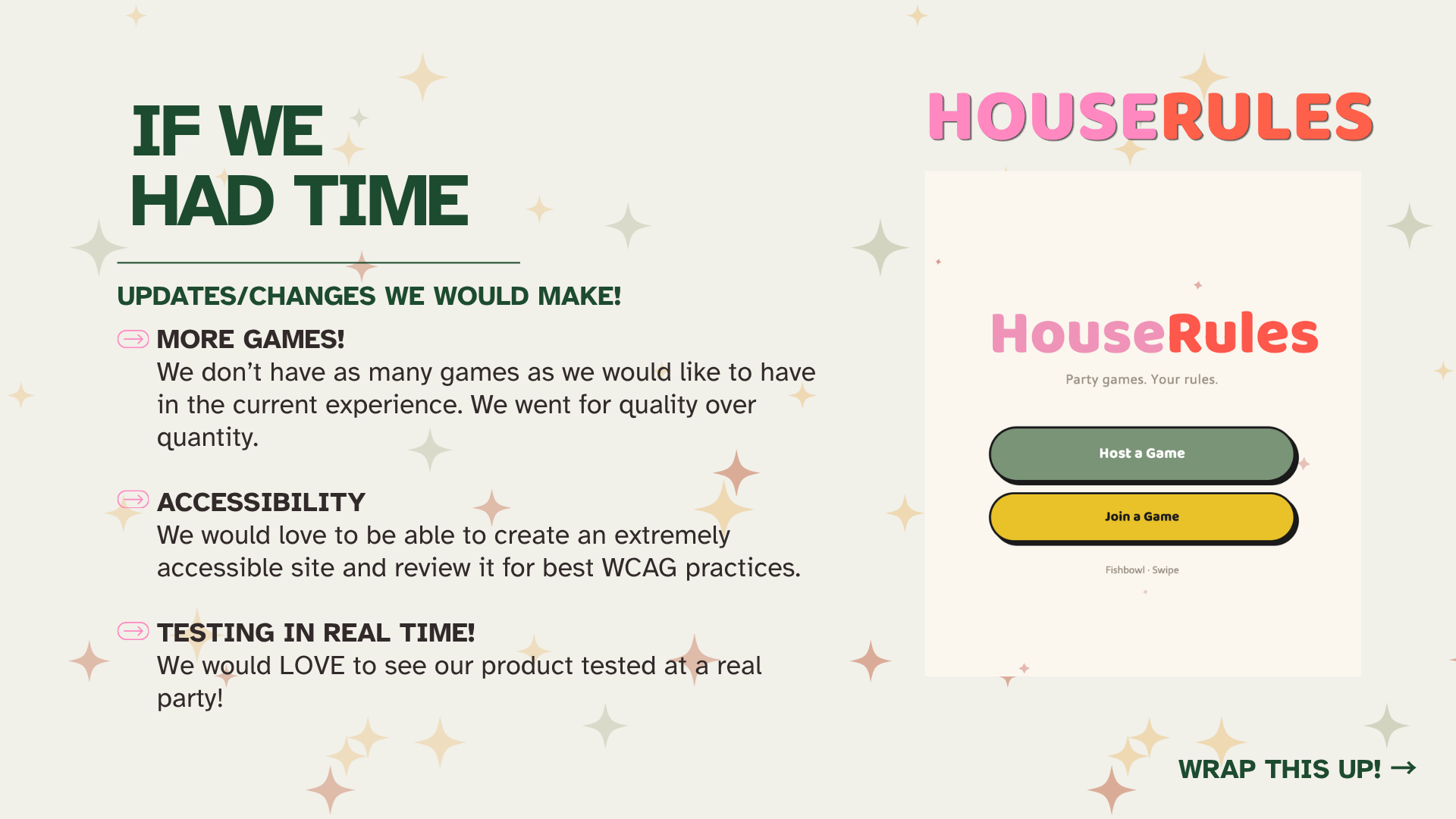
During technical development, our initial plan of using AI "vibe coding" on static HTML/CSS/JavaScript hit a brick wall when trying to sync live multiplayer game states. To solve this, we consulted with senior developers and migrated the entire architecture to a React application powered by Playroom and Base44. This shift allowed us to reliably synchronize game states across 4 to 10 phones and a central screen using a simple 4-letter room code, letting players effortlessly upload photos and run custom games like Fishbowl and Swipe.
IMpact
By moving from static prototypes to a live, synchronized React platform, we eliminated setup friction and proved that player-generated humor drives higher replay value than static commercial games. HouseRules successfully transformed informal "house rules" into a functional, zero-install digital experience.