Sephora wcag aaa audit
Role: Accessibility Researcher & UX Designer
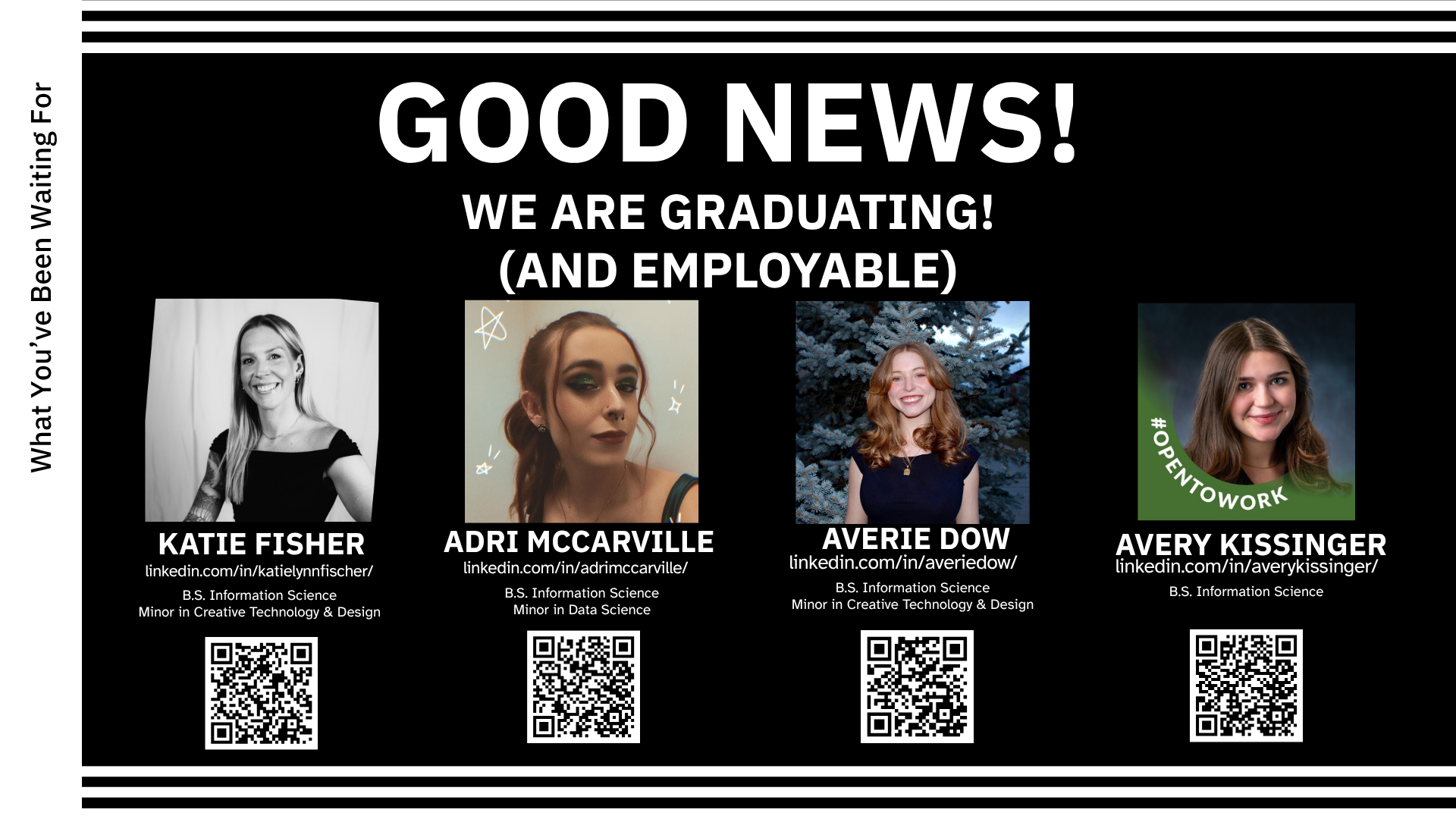
Team: Averie Dow, Katie Fischer, Adri McCarville, Avery Kissinger
Context: Design for Accessibility (INFO 4871), CU Boulder
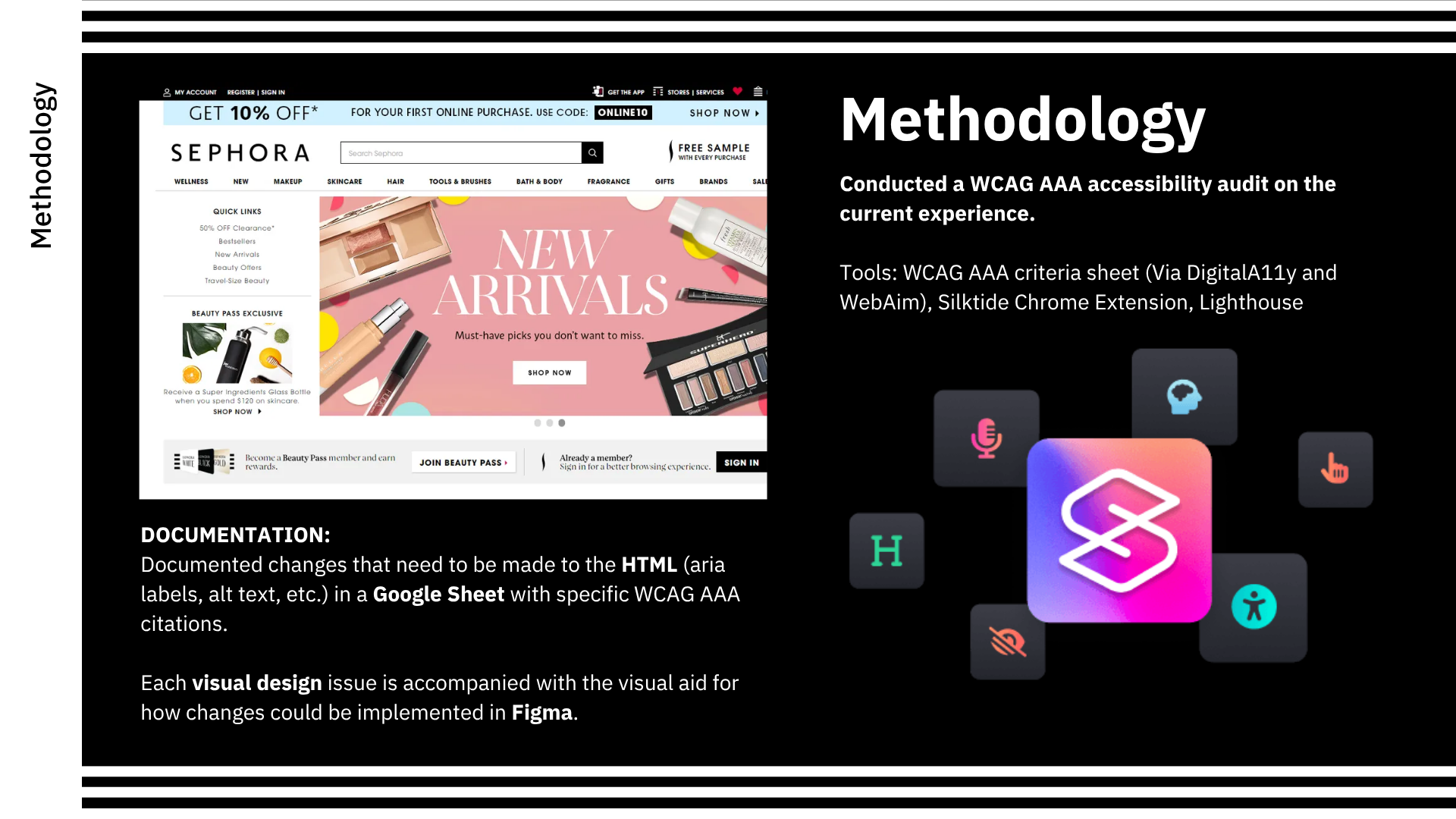
Tools & Methods: WCAG 2.2 AAA Checklist, Silktide, Lighthouse, Figma Annotations, External SME Review
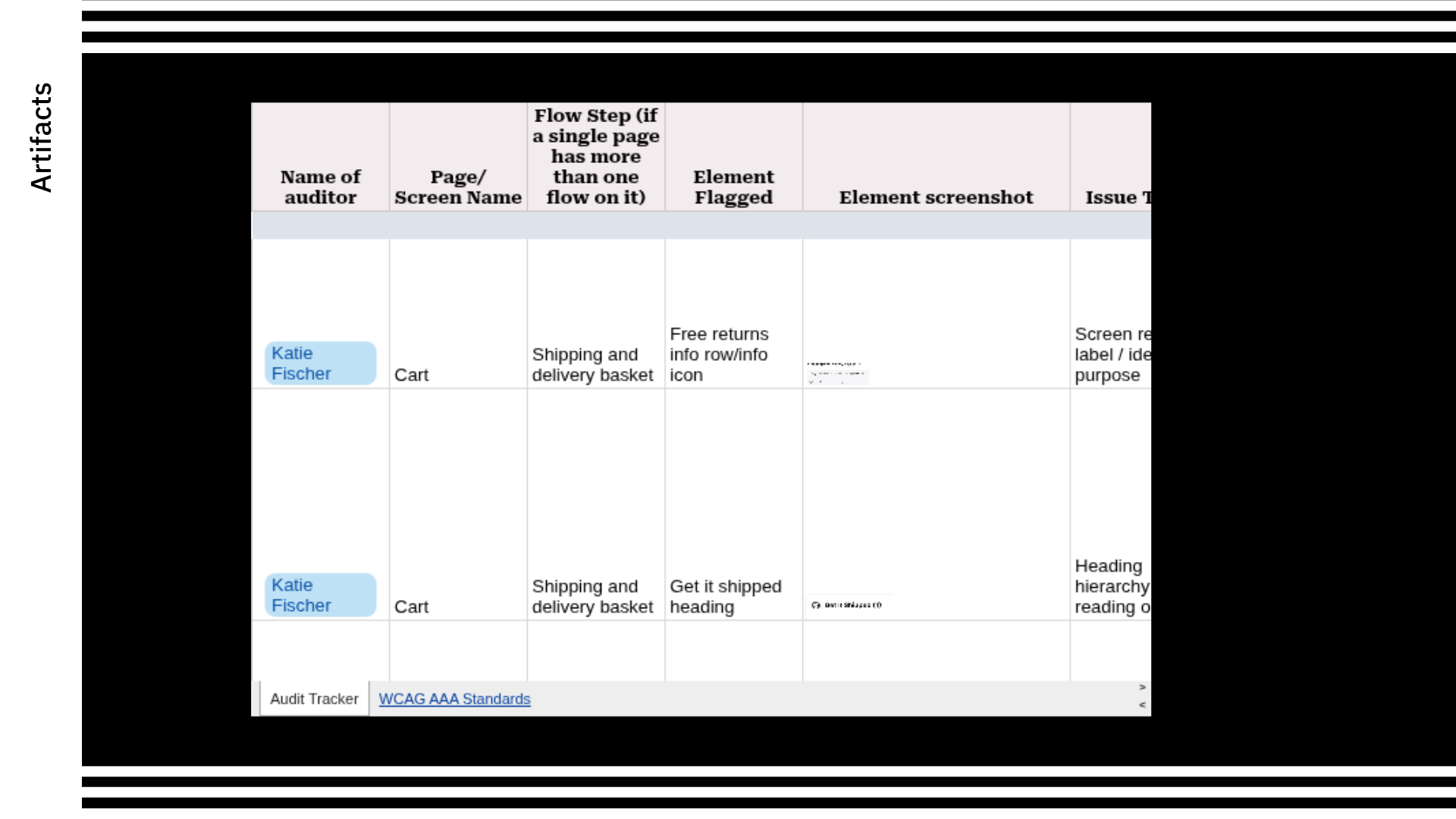
Key Deliverables: 101-Issue Audit Matrix, Golden Path User Flow Map, High-Fidelity Figma Remediation Specs, Code-Level HTML/ARIA Recommendations
Overview
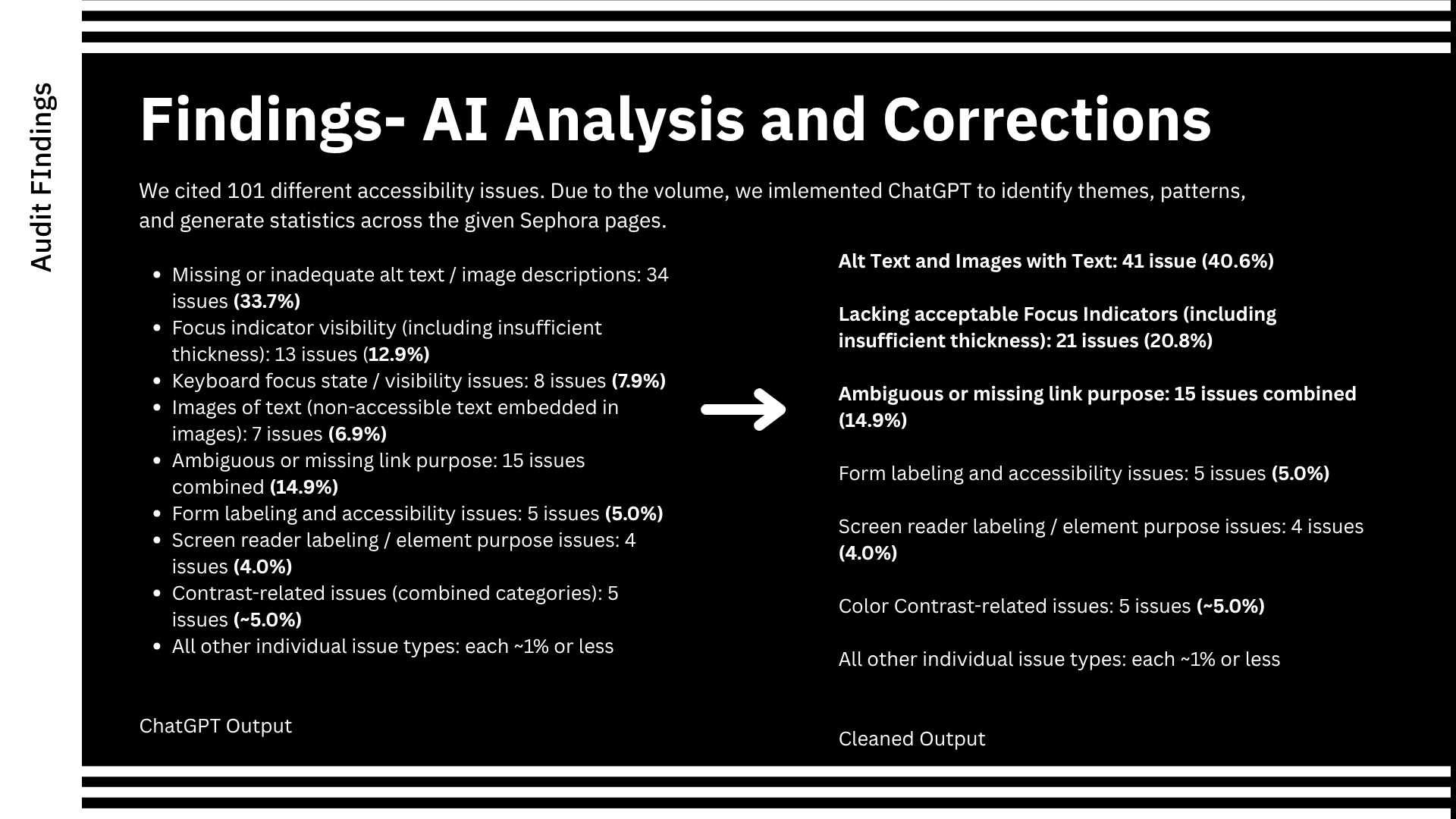
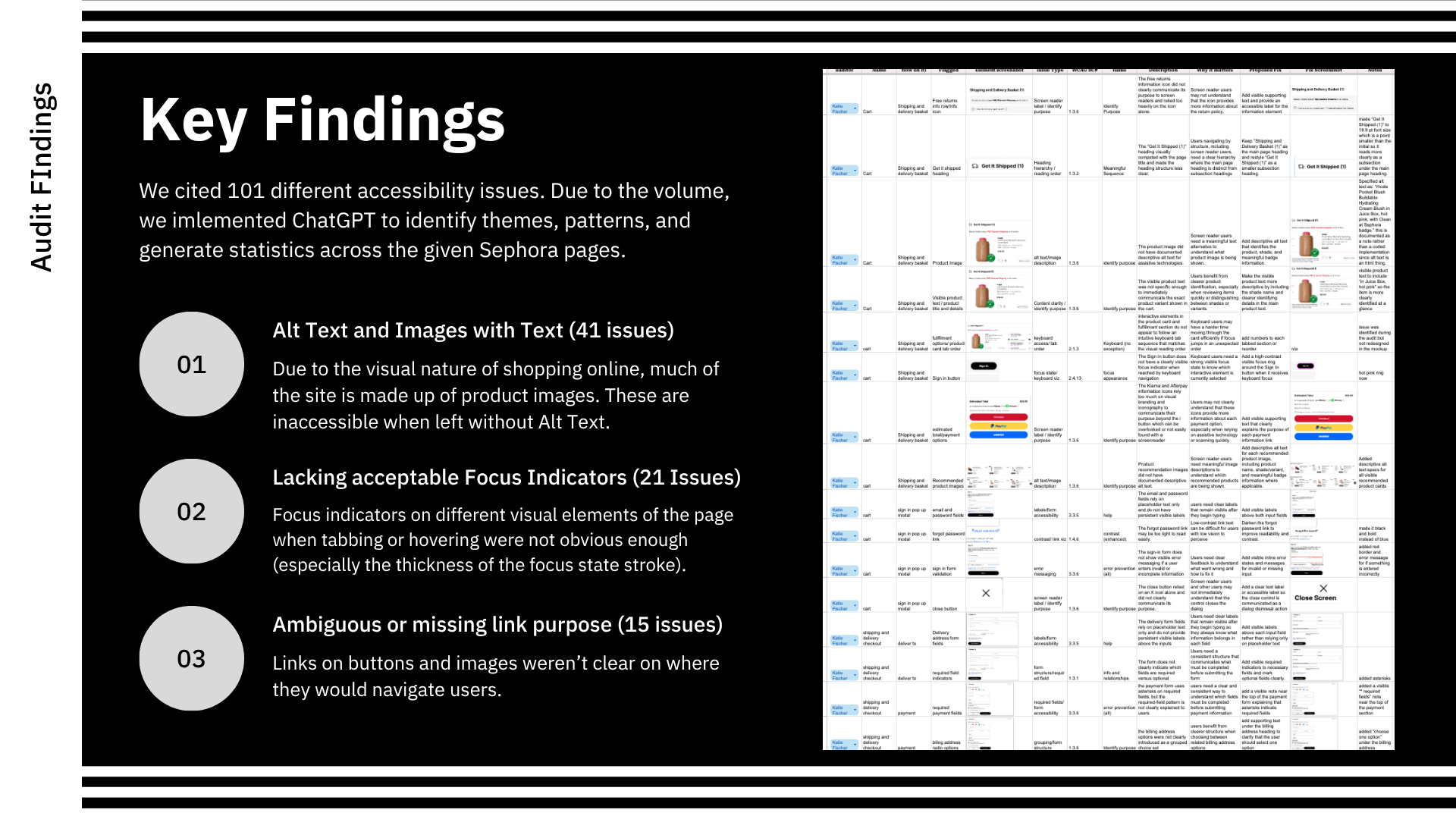
Sephora was struggling with compounding digital barriers across its online shopping experience, so our team conducted a comprehensive WCAG 2.2 AAA accessibility audit to identify 101 distinct compliance violations and deliver verified HTML and Figma design fixes across the entire checkout flow. By targeting shared component flaws, we proved how large-scale retailers can move beyond bare-minimum compliance to build truly independent e-commerce experiences.
Tension
Online beauty shopping is a visual, multi-step process where customers need to browse, compare shades, read reviews, and check out on their own. While Sephora aims for baseline WCAG 2.0 AA compliance following past legal scrutiny, their live platform still presented major barriers for users relying on screen readers or keyboard navigation.
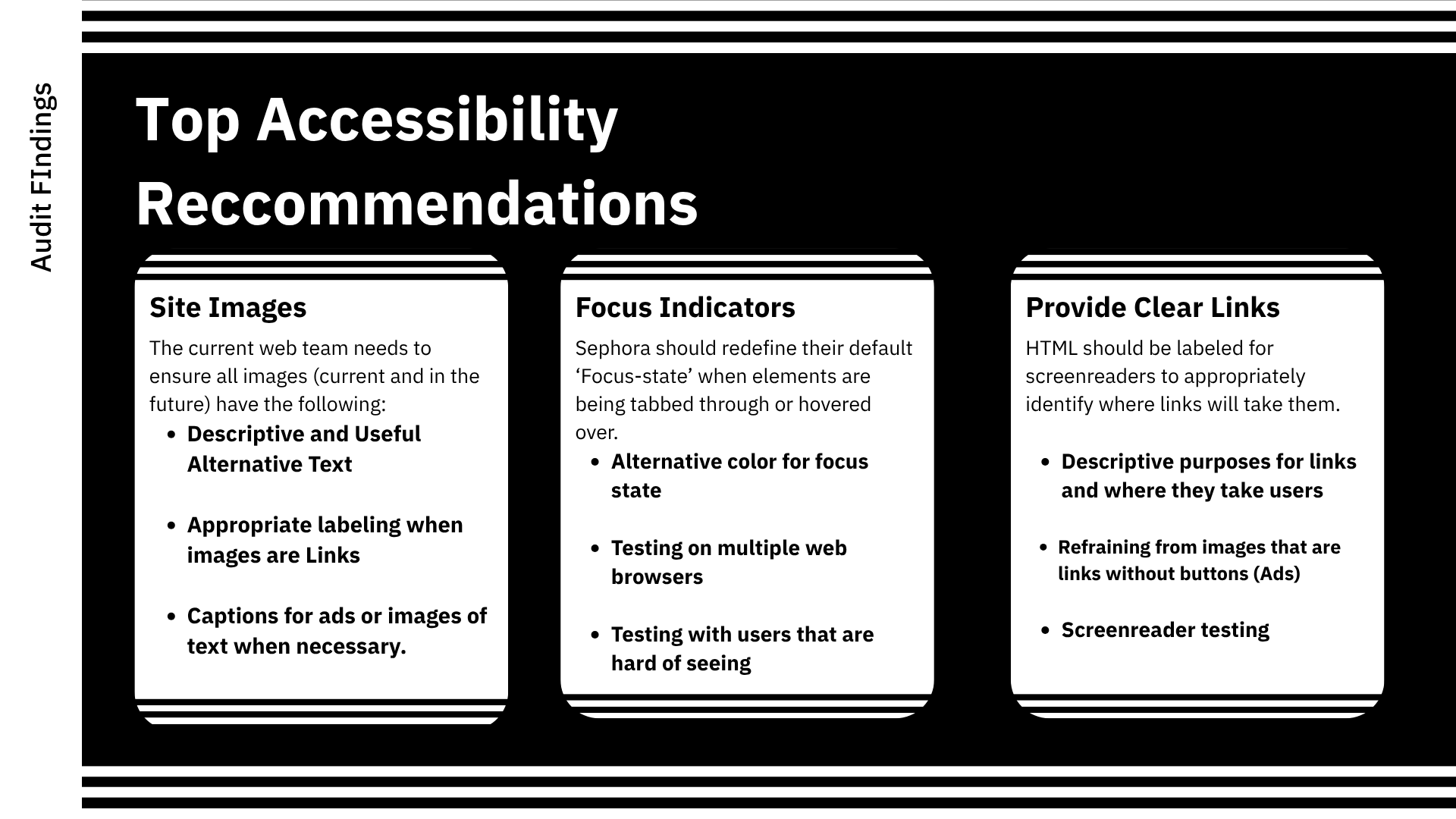
In daily use, shoppers faced critical friction: missing image descriptions left non-sighted users guessing on shade palettes, thin focus rings disappeared during keyboard tabbing, and vague button links like "Shop Now" provided zero context on where they led. If left unaddressed, these small interface gaps stack up across the Golden Path, forcing shoppers with disabilities to abandon their carts and exposing the business to ongoing legal and reputational risk.
Design
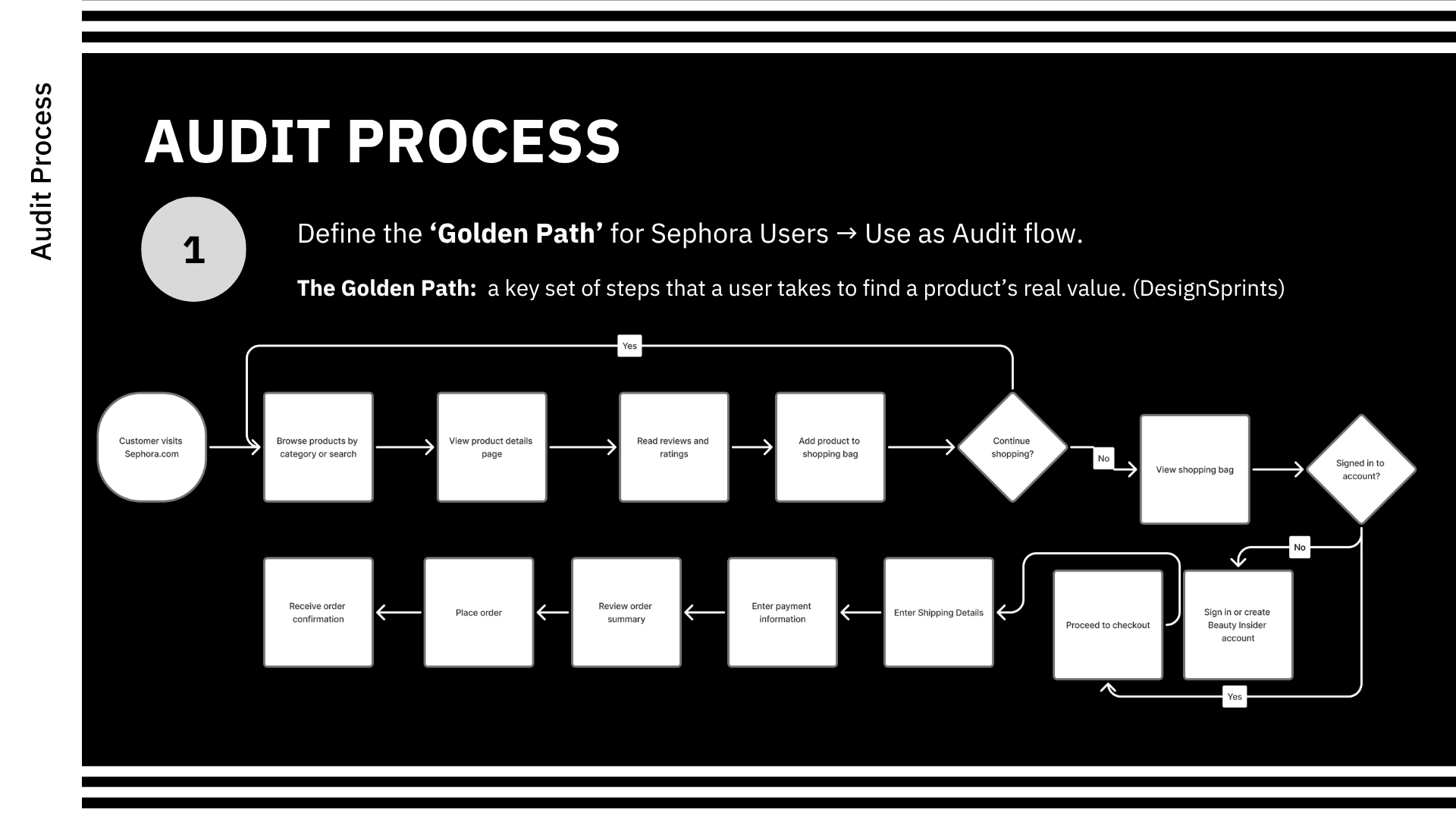
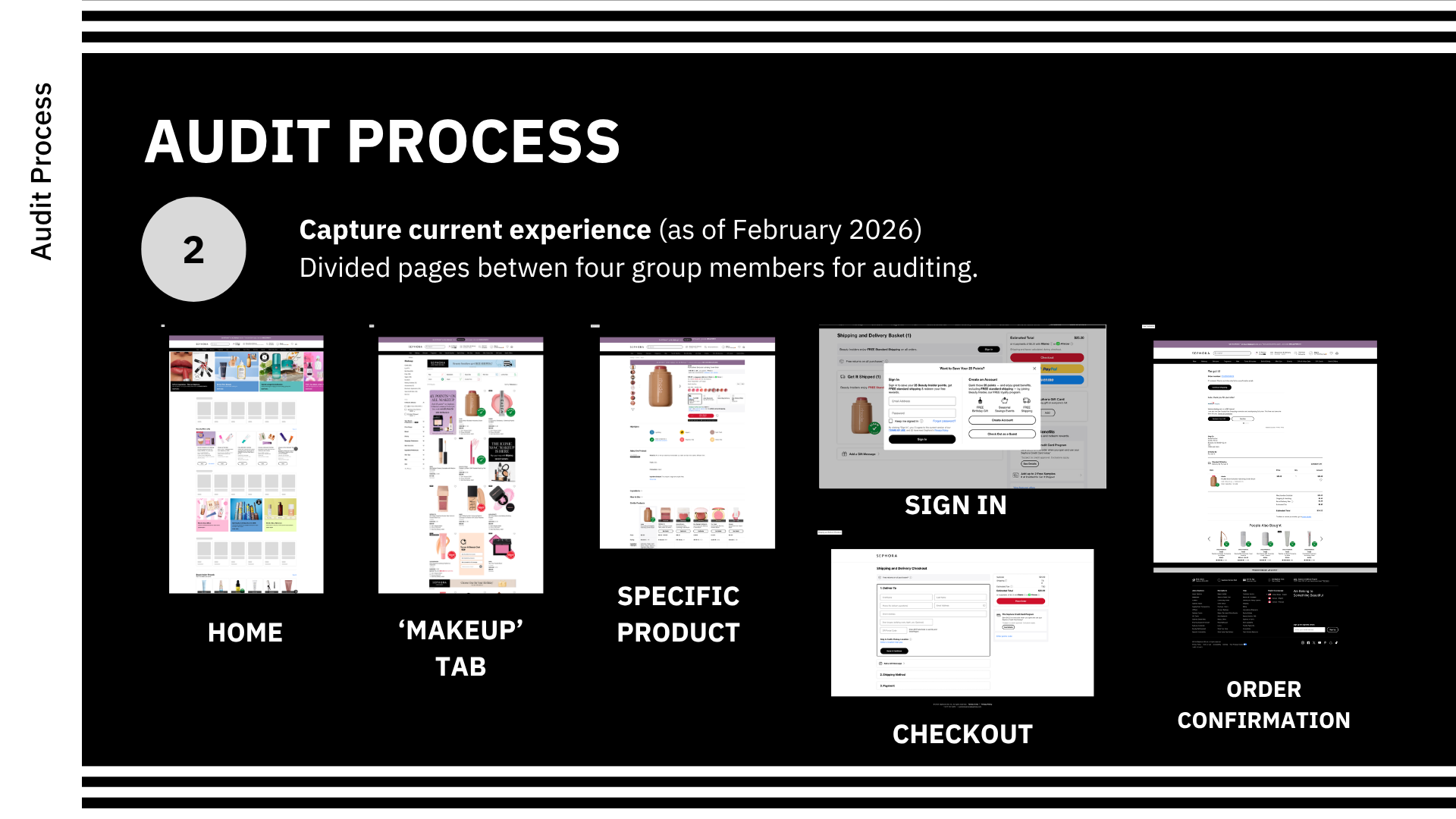
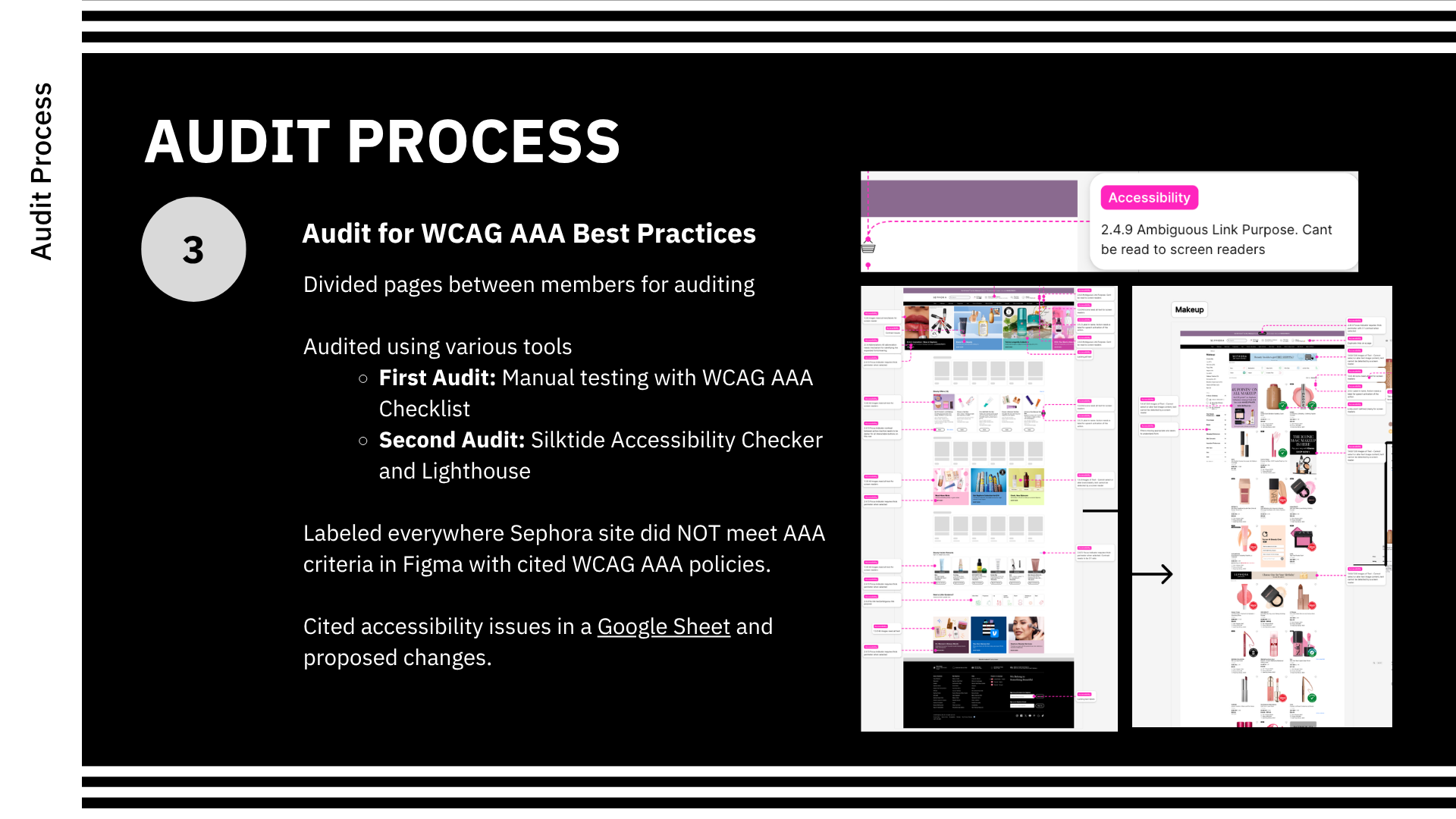
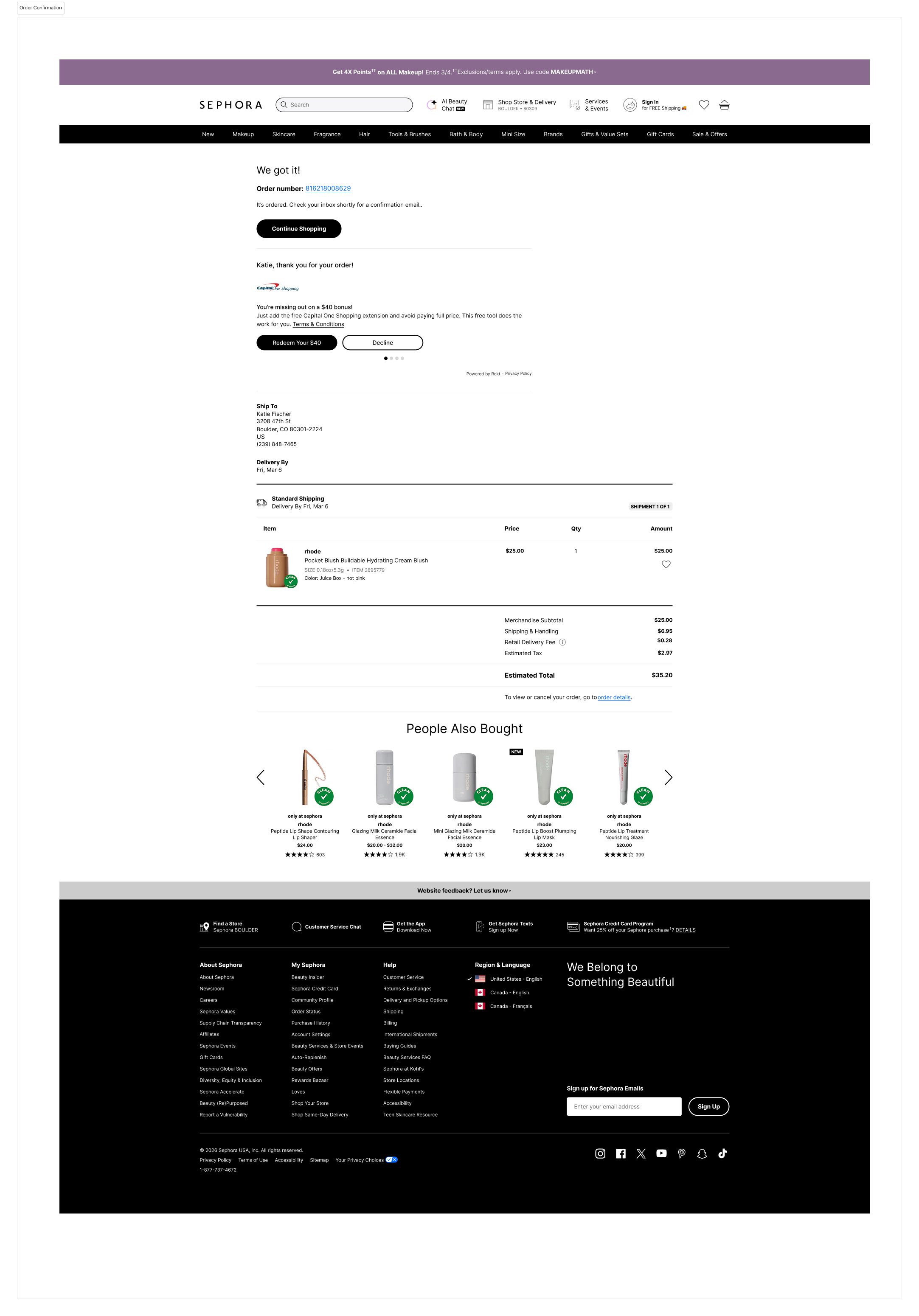
We mapped Sephora’s core "Golden Path"—from the homepage and product detail pages to the cart, sign-in modal, and final payment screen. Using a dual-audit approach, our four-person team paired manual WCAG 2.2 AAA checklist audits with automated testing via Silktide and Google Lighthouse.
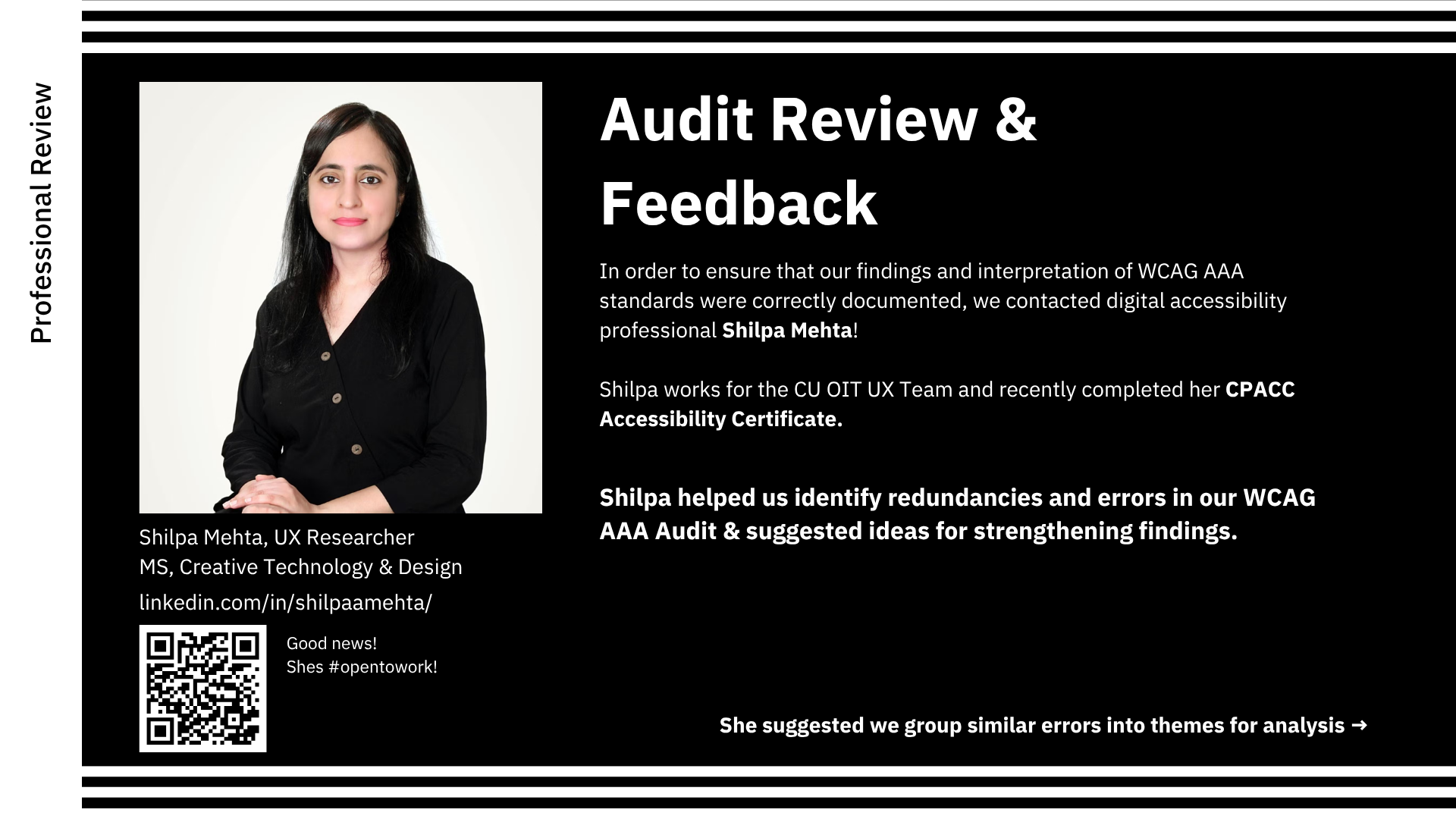
Instead of proposing surface-level visual tweaks, we separated our fixes into two distinct tiers: visual component redesigns in Figma and technical implementation specs for engineering. To ensure our findings were bulletproof, we partnered with Shilpa Mehta, a CPACC-certified UX accessibility researcher at CU OIT, who helped us refine our WCAG criteria mappings, eliminate redundancies, and cluster our 101 issues into systemic design system patterns.
IMpact
Our audit revealed that over 75% of all accessibility failures came down to just three recurring component issues: missing alternative text, weak focus indicators, and ambiguous links. Fixing these core components at the design system level resolves the vast majority of user barriers site-wide without requiring one-off fixes on every page.
Auditing Sephora proved that accessibility is rarely an isolated screen issue. When companies build accessible components from the code up, they solve dozens of barriers across the entire customer journey at once.